
Your Phone Is About to Get an AI Brain Transplant With Quantum Computers
In the next two to three years, every app on your phone is going to disappear...well, not disappear, just move to the back end. Soon, you'll just talk to an AI version of you, or any avatar you want it to be. With the power of quantum computers, it will book your rides, haggle with customer service for you, run your calendar...and more!

So What Will Be Powering This AI Sidekick? Quantum Computers

Quantum computers don't just crunch numbers faster. For certain problems, they make the impossible possible. Something that would take a classical supercomputer literally millions of years (like cracking a 2,048-bit encryption key) could take a mature quantum machine a matter of hours or days. Molecular simulations that eat up weeks of cluster time? Down to minutes, maybe seconds. That kind of horsepower is exactly what's going to fuel your avatar's brain.
Teamwork Makes the Quantum Dream Work

Building one giant quantum computer is brutally hard. So instead, the smarter move is daisy chaining a multiple quantum processors together into one unified system. That's where Cisco's Universal Quantum Switch comes in. It shuttles quantum information between different types of quantum hardware over regular fiber optic cable, at room temperature, without breaking the delicate quantum states involved. It's non-blocking too, meaning tons of connections can happen simultaneously. Rather than wiring every processor directly to every other one, you just plug everything into the switch, and it creates entanglement links on the fly which is unpredictably scary fast!
Nvidia's Missing Piece To The Puzzle
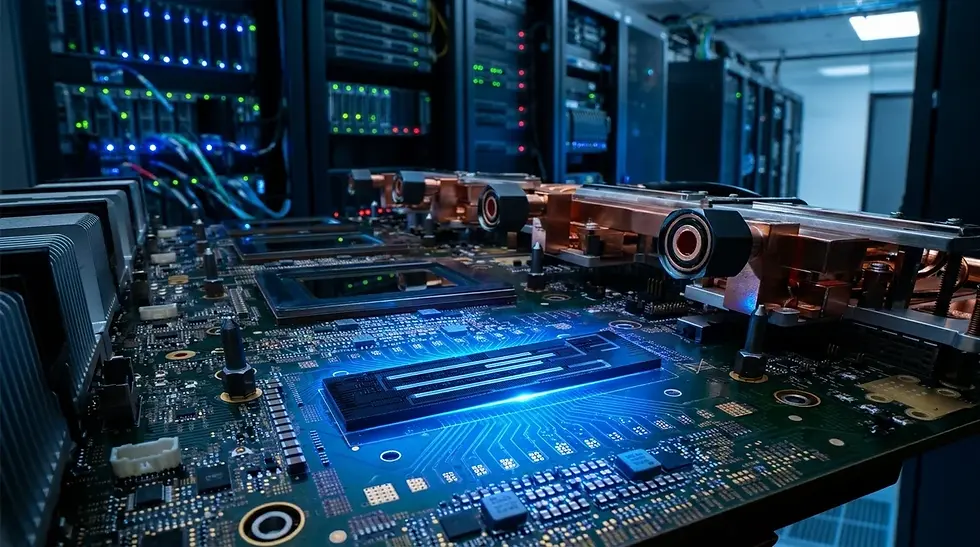
Quantum chips still need regular computers to help out though. That's Nvidia's job...connecting quantum processors to GPU clusters at blazing speed, microseconds fast. So quantum power and AI run side by side, seamlessly. Their NVQLink tech connects quantum processors to GPU clusters at roughly 400 Gb/s with latency measured in microseconds. Their DGX Quantum nodes pair Grace Blackwell superchips with quantum control hardware for jaw-droppingly fast GPU-to-controller response times. And their CUDA-Q software lets developers program CPUs, GPUs, and quantum processors like they're all one machine. Providing quantum-powered optimization that can run right alongside massive AI workloads, seamlessly. That's the invisible infrastructure behind your future avatar, and eventually, the robots too.
Robots With Reflexes Faster Than Yours
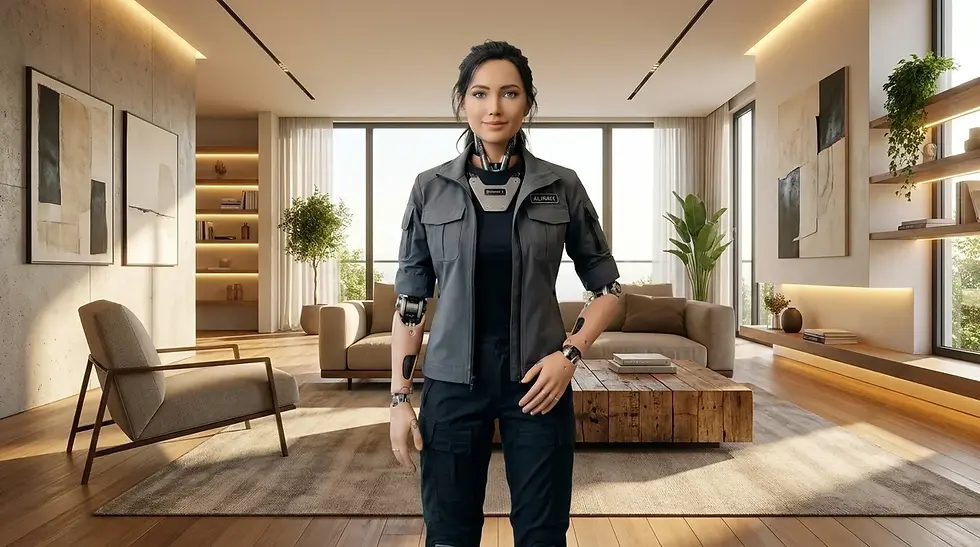
Think about how long it takes you to react to a flash of light, a weird smell, or an unexpected touch, somewhere between 100 milliseconds and a full second, depending on the sense. Now compare that to next-gen robots running control loops every 0.5 to 2 milliseconds. Their vision, hearing, touch, and chemical sensors feed straight into onboard AI that can spot something and react within a few milliseconds, while still “thinking ahead” using predictive models so movement stays smooth. Chilling or exciting?...Is this the future you imagined?
Comments